
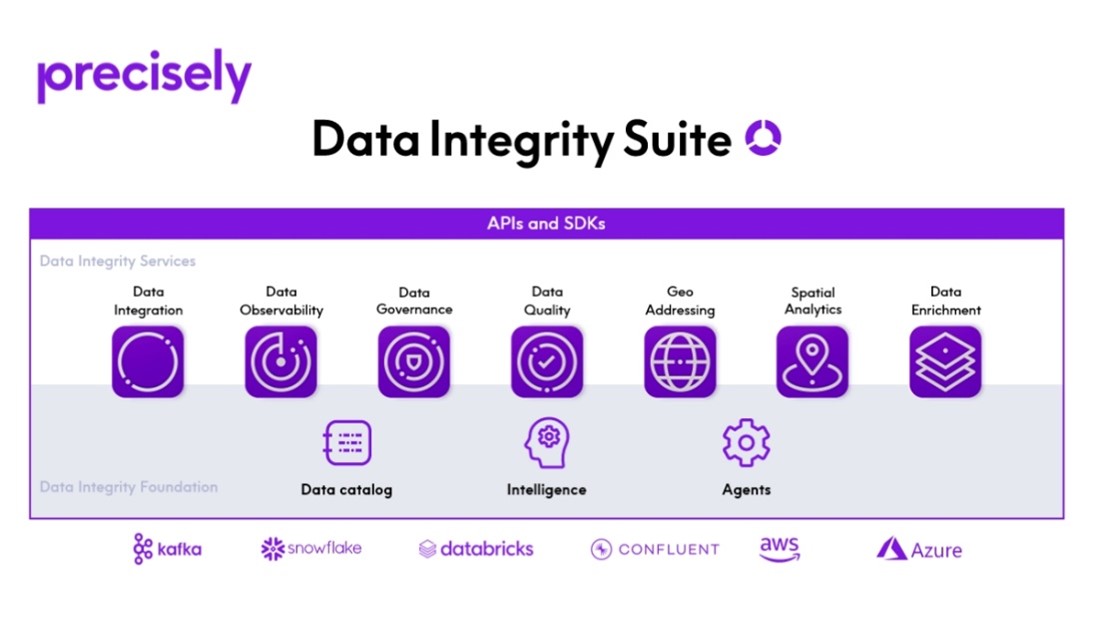
In the pursuit of confident business decisions, customers now have access to interoperable data integrity services offered by Precisely, the global frontrunner in data integrity solutions. These services operate seamlessly in any data environment, be it on-premises or in the cloud.
Ensure a seamless transition to improved data quality practices by identifying the crucial aspects to look for in a data quality management tool that meets your organization's unique needs and challenges.
Master Data Management partner, Precisely, has announced the latest innovations within the Precisely Data Integrity Suite. Customers can now swiftly construct data pipelines, seamlessly integrate data into new cloud platforms using an extensive range of connectors and effortlessly utilise enhanced features such as data observability, geocoding, and data enrichment capabilities. The suite's unified data catalogue facilitates seamless interoperability among its services and introduces a new user interface that enables users to search and explore an extensive inventory of business and technical metadata.
Sanjeev Mohan, Principal and Founder at SanjMo and former Gartner Research VP, commented, "Today’s businesses wrestle with delivering trusted data from hybrid environments to analytic systems using a mix of point solutions. They lose control of their data as it moves from data producer to data consumer, and as a result, data issues aren’t identified until they hit downstream systems."
Organizations are under increasing pressure to rapidly leverage the power of reliable data for confident decision-making while simultaneously reducing costs by maximizing efficiency. A recent study conducted by the Center for Business Analytics at Drexel University's LeBow College of Business reveals that data-driven decision-making is the foremost objective for organizations worldwide, with 77% of business leaders identifying it as their main priority for 2023. This is closely followed by the positive business impacts associated with confident decision-making, including operational efficiency (73%), cost reduction (62%), revenue generation (59%), and regulatory compliance (57%).
The suite's interoperable services enable customers to make informed business decisions based on reliable data. These services allow proactive issue detection, provide a comprehensive understanding of data usage and lineage, enable data enrichment through curated datasets, and make data accessible wherever it is most needed, whether that's in an on-premises, cloud, or hybrid environment.
Key enhancements to the Data Integrity Suite include:
-
New Data Quality service: Precisely's market-leading data quality capabilities, which are already favoured by customers, are now directly available within the suite. Customers can design data quality pipelines using an intuitive interface and execute quality processes natively in the cloud or any other data environment. Critical data can be easily validated, geocoded, and enriched to ensure accuracy, consistency, and contextual relevance for downstream operations and analytics.
-
Integrated data catalogue: Metadata is automatically captured through any connection in the Data Integrity Suite, driving a user experience centred around a data catalogue. Users can access a complete inventory of business and technical metadata, enabling effortless searching, exploration, comprehension, and collaboration across critical data assets.
-
Support for hundreds of new connectors: The suite now offers expanded compatibility with a wide array of data environments, allowing seamless integration of data into new platforms using numerous additional connectors. The Data Integration service within the suite facilitates real-time data replication from diverse sources, including complex mainframe IMS and VSAM sources, as well as leading cloud platforms such as Snowflake, Google BigQuery, and Amazon Web Services (AWS) Redshift. This ensures that data is available precisely where it is needed most.
-
Convenient access to geocoding and data enrichment: Address data can be easily validated, geocoded, and prepared for enrichment by assigning a unique and persistent PreciselyID. This functionality is accessible through the suite's new cloud-native Geocode API or the Data Quality service.
-
New data observability capabilities: The Data Observability service within the suite now enables proactive monitoring of additional data attributes, allowing the detection of issues before they impact downstream systems. Organizations benefit from alerts on schema drift, significance thresholds, and comprehensive support for all major cloud data warehouses. These features provide greater insight and control over data observations than ever before.
Gary Allemann, MD at Master Data Management, said, "The Data Integrity Suite now combines Precisely's long-standing expertise in data quality with data observability and data governance, empowering teams to not only observe, detect, and predict problems but also to rectify them in the very environments where the data resides."
Discover the features and functionalities of Precisely Trillium in ensuring data quality excellence with insights from the Precisely Trillium product sheet
Address the growing demand for real-time insights by recognizing the importance of real-time data quality as discussed in the importance of real-time data quality, enhancing decision-making capabilities.
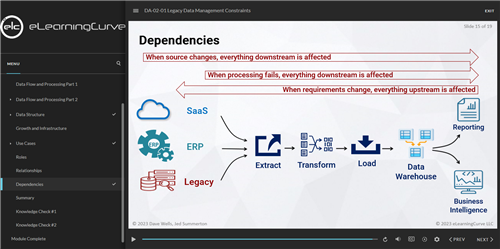
Designing and Implementing Analytics Data Architecture is a new business intelligence course designed to address modern data management challenges and provide insights into modern practices and data architecture design patterns and extends both our BIe and data architecture curriculums.
In today's rapidly evolving business world, utilizing data and analytics has become imperative for organizations to compete effectively. However, with the ever-advancing technologies and capabilities, it is challenging for businesses to keep up with the changes and manage data for maximum impact. Despite this, most organizations still cling to the outdated data architecture of the BI era, which is insufficient for supporting modern analytics use cases. Merely patching new components onto the surface of legacy architecture is not sustainable and fails to provide adequate support for modern data requirements.
Although modern data architecture may seem complex and difficult to implement, it is crucial to step up and embrace it. The first step is to define the necessary business and data capabilities, followed by integrating new capabilities into the existing data management practices.
The step-by-step approach outlined in the course ensures that businesses can establish a sustainable and adaptable data management architecture that caters to their present and future needs. By taking this course, businesses can gain a competitive edge in the market and achieve maximum value from their data resources.
You will learn:
- The reasons that legacy data architectures need to be modernized
- The multitude of requirements for effective analytics data management
- The similarities and differences of Data Lake, Data Fabric, and Data Mesh architectures
- Techniques to identify analytics business capabilities and requirements
- Techniques to identify analytics data capabilities and requirements
- How to apply architectural design patterns and frameworks
- How to adapt reference architectures
- The path from requirements to a well-designed architecture
- Six techniques for architecture implementation
This course is geared towards:
- Practicing and aspiring data architects
- CDOs, CIOs, and other executives responsible to provide data management leadership
- Enterprise, analytics, and technology architects who work with data architects
- Data engineers and systems engineers
- Designers and developers of data management and analytics systems
- Anyone who needs to collaborate with data architects
The course is developed and delivered by elearningCurve Education Director, Dave Wells and Daniels College of Business lecturer Jed Summerton, and will contribute towards a Certified Information Management Professional (CIMP) accreditation in Data Architecture or the CIMP in Business Analytics.

Use Safyr to liberate your SAP MDG metadata for data governance, data catalogue, master data management and other data projects.
Master Data Management partner, Silwood Technology Limited has announced the availability of Safyr® for SAP MDG metadata harvesting. SAP’s Master Data Governance (MDG) application supports customers who need to combine master data from a number of sources and then manage it effectively.
This release of Safyr adds yet further support for customers who need to incorporate metadata from SAP’s array of complex ERP applications with enterprise data transformation programs. Safyr is the leading ERP metadata harvesting, visualization and discovery software product designed specifically for use by data analysts, data architects and data scientists.
Customers use Safyr to exploit the data structures in SAP MDG systems. This is a critical task for accelerating the effective delivery of a wide range of information-led projects such as data catalogues, data governance, data warehouse, data analytics, master data management, and more.
Technically, SAP MDG uses a Data Model paradigm to define the data structures that are to be the subject of its Master Data Governance features. Safyr liberates the metadata for these data models by harvesting the SAP MDG tables that define these models. Safyr is particularly valuable if the customer has significantly extended the set of standard SAP MDG data models or has multiple instances to manage.
Gary Allemann, MD at Master Data Management, said, "The trend towards a composite business architecture means that more and more organisations are seeking to access data within SAP and make it available to external analytics and governance platforms, like Data360. This addition to Safyr makes it easier to access SAP MDG data and is well timed."
Safyr for SAP MDG is delivered as part of Silwood’s Safyr for SAP ERP product at no extra cost. It is available immediately to all Safyr for SAP customers who have an existing subscription or are current on support and maintenance.
About Silwood Technology Limited
Silwood Technology is the leading supplier of self-service metadata harvesting software products for Enterprise Application Packages including SAP, SAP BW, SAP S/4HANA, SAP MDG, SAP SuccessFactors HXM, Salesforce, PeopleSoft, JD Edwards, Siebel, Oracle E-Business Suite, and Microsoft Dynamics.
Silwood Technology’s product, Safyr® supports customers and partners who need to accelerate the delivery of complex data governance and other critical data and information management transformation projects.
Sample customers include BASF, ATB Financial, Hewlett Packard, VW, Twitter, Henny Penny, Aldi, Centrica and many others in virtually all vertical sectors.
Silwood partners include Collibra, Alation, Informatica, Quest Erwin, Zeenea, Solidatus, Idera and more

Master Data Management partner, eLearningCurve, announces new Data Architecture Fundamentals course. This 5-hour, online course, by Marco Peco and Dave Wells, provides a comprehensive overview of data architecture and how it fits into any Enterprise Architecture capability
Data architecture serves as a framework that governs the management of data from the very beginning, starting with its creation or collection, to the various types of processing it undergoes, and its distribution, usage, and ultimate business impact. By offering a set of principles, structures, guidelines, and standards, data architecture ensures consistency, reliability, resilience, adaptability, and sustainability in data management practices and processes.
Data architecture is a multifaceted endeavor that involves understanding how various components of data management fit together. It must integrate seamlessly with business architecture, systems architecture, and technology architecture, serving as a crucial element of enterprise architecture. Within data architecture, it's necessary to establish connections between data models, structures, sources, processes, flows, products, services, technologies, users, use cases, business impacts, and more.
In this five-hour online course, participants will examine the concepts, principles, and products of data architecture from six different viewpoints, including business alignment, data lifecycle management, data usage, content and structure, processing and storage, and technology. The course brings all these perspectives together to conclude with a detailed look at six steps to architecture design, six methods of architecture implementation, and the importance of continuously evolving data architecture.
You will learn:
- Multiple, complementary definitions of data architecture
- Why data architecture is needed – both business and technical cases
- How data architecture relates to enterprise architecture, data culture, and data governance
- Six perspectives of data architecture and the underlying concepts of each
- What is produced by architectural activities and processes
- How data architecture is developed, managed, and implemented
- Best practices for data architecture
This course is geared towards:
- Practicing and aspiring data architects
- CDOs, CIOs, and other executives with a role in defining data strategy
- Enterprise, business, systems, technology, analytics, and other architects who work with data architects
- Data engineers, application designers and developers, data systems designers and developers, and others who apply data architecture
- Anyone who needs to collaborate with data architects, and everyone with an interest in data architecture

New features expand automated data management solution with added scanner support and technology upgrades to improve data lineage experience
Master Data Management partner, MANTA, announced the launch of Release 38, offering new capabilities to its world-class data lineage platform including powerful new scanners and technology enhancements to improve user experience and expand data pipeline visibility.
With Release 38, MANTA is offering new scanners for cloud-based data integration tools Fivetran and Azure Data Factory. By connecting to and scanning these two popular data integration solutions, MANTA users will achieve a comprehensive visualization of data flows to produce informed, actionable business insights.
"This release incorporates two popular cloud-based data integration choices to extend the already substantial, automated view that MANTA provides of the end-to-end data pipeline - whether on-premise or in the Cloud," said Gary Allemann, MD at Master Data Management. "This visibility helps to increase both the availability and the agility of critical data pipelines by providing data engineers with an easily understood visual tool to assess impact, whilst extending ease of understanding for business users."
Release 38 incorporates several enhancements to existing data lineage scanners to improve user experience and offer greater visibility into data pipelines. New capabilities include:
- Snowflake: support for over two dozen operators and functions to deliver a detailed view of data flows across enterprise pipelines
- Alation Refresh Tokens: API connectivity support for Alation integration to enable comprehensive data visibility and security
- Power BI: added support for interactive data visualizations with paginated reports to print data in a neat, page-fitting table format
- PostgreSQL: support for “COPY FROM” statement to further extract and analyze pertinent metadata within selected databases
- SAP HANA: export command support for partner catalog integration
Additional enhancements to MANTA’s infrastructure include improved performance of the Neo4j repository and the introduction of MANTA Alias, a new tool offering customers the ability to rename components within the repository tree to replace overly technical names with one that is more recognizable to the user.
“MANTA’s dedication to providing the most comprehensive data lineage solution is reflected by our engineering team’s continued product innovation,” said Ernie Ostic, SVP of Product at MANTA. “With Release 38, MANTA users have access to new and improved lineage capabilities for further visibility into data environments and access to the highest quality data to inform business decisions that fuel company growth.”
- Silwood Technology announce availability of Safyr for SAP SuccessFactors metadata discovery
- Master Data Management partner, Precisely, Ranked Among Top Five Data Management Software and Data Integration Providers by Gartner
- Master Data Management to assess data culture in partnership with Logicle Analytics
- New Course + Certification! Cloud Data Management Capabilities (CDMC) Framework


 Got a Question?

